WeWork
Product Design & Strategy
Shipping the future of flexible workspace
At WeWork, I owned design and strategy for a new pay-as-you-go product, WeWork On Demand, from concept and proposal, through research and testing, to shipped MVP and globally scaled offering.
Role
Lead Product Designer
Team
Design Director Product Manager User Research Mobile Engineers
Duration
Full-time 2018 – 2021
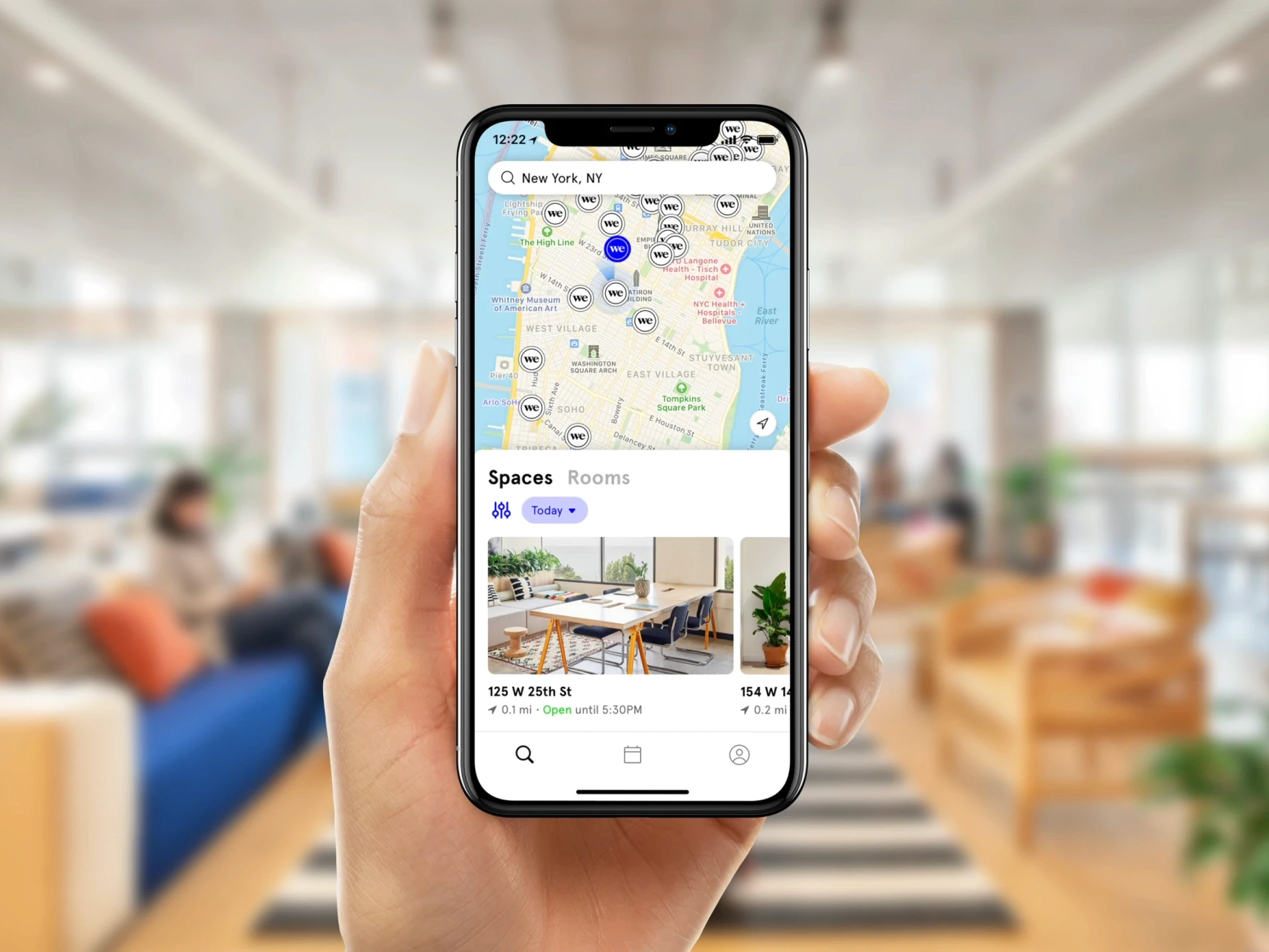
Space-as-a-service
Goals
With a growing transient workforce desiring flexibility, I helped identify a user need for easy to find space across WeWork's global network. Our goal was to increase member conversion, building profitability, and space utilization by allowing non-members to browse our workspace offerings without creating an account and book workspace in local currency instead of credits.
1st year growth
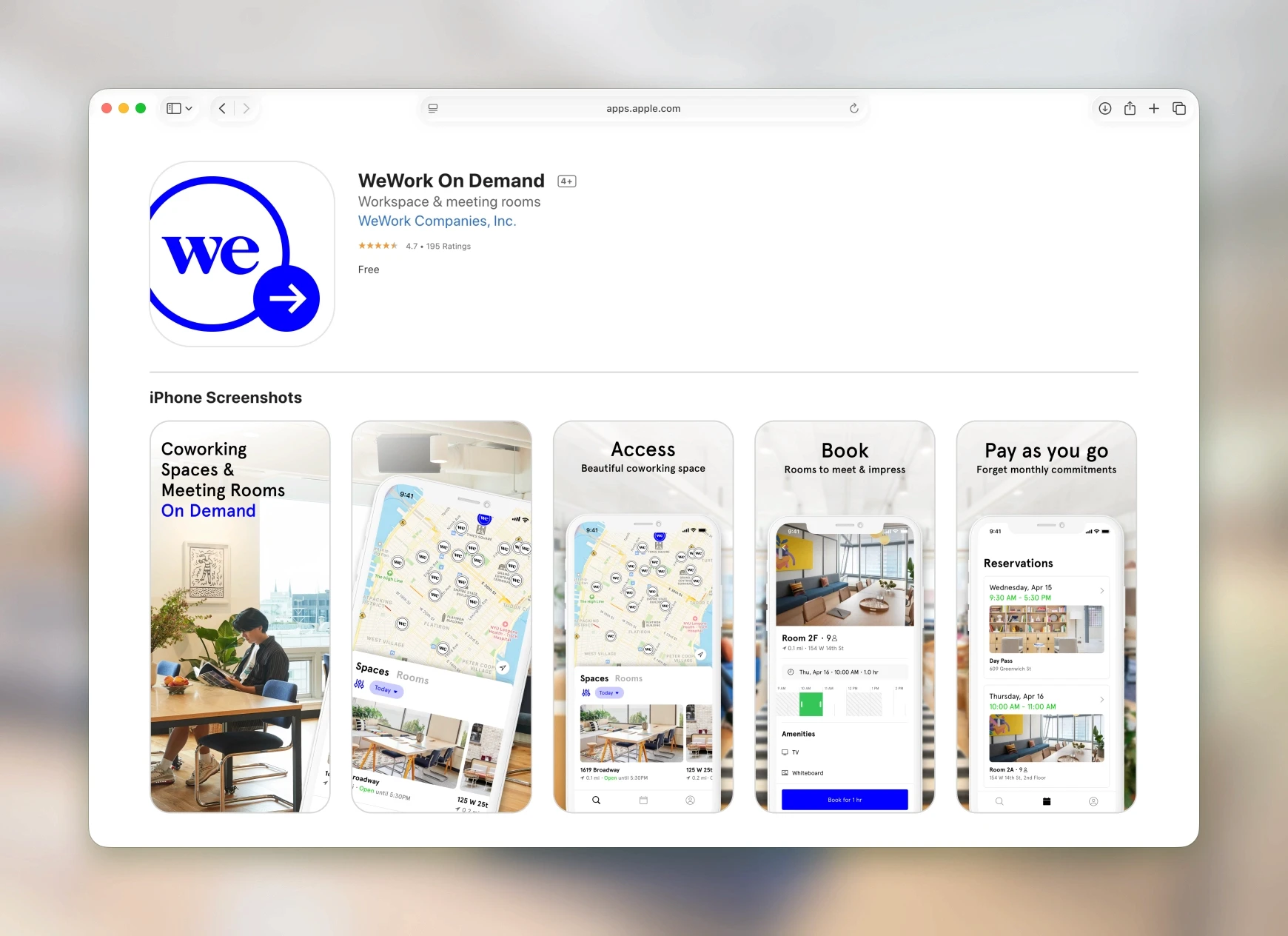
From a pilot at 10 locations in NYC, On Demand access had expanded to 230+ WeWork locations in 30+ cities globally.
Context
WeWork Member app
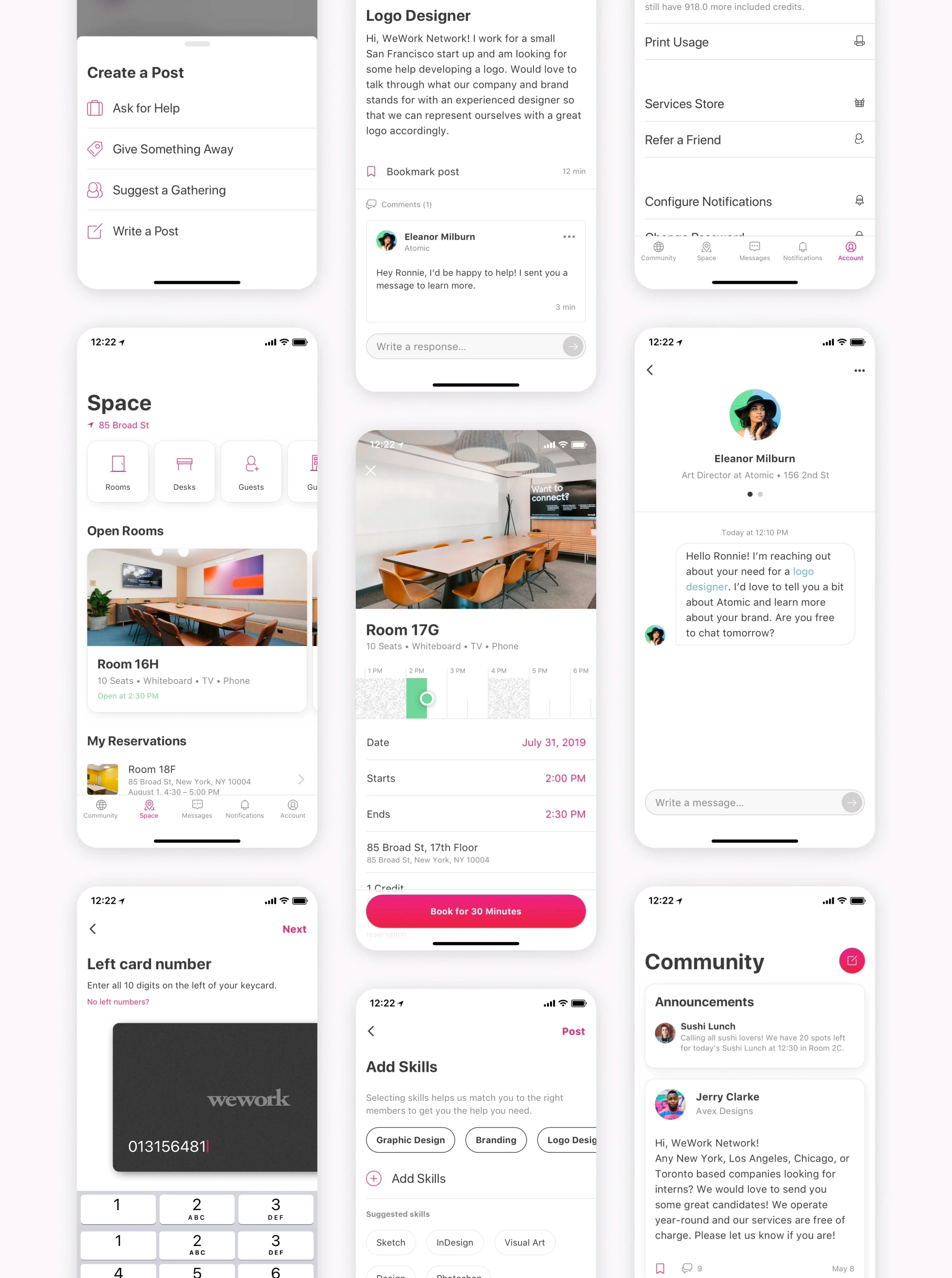
When I joined WeWork in 2018, I helped redesign and execute a global visual refresh of our Member app, bringing our app rating from 2 to 4.7.
Challenges
When considering how best to prove whether pay-as-you-go was a viable offering, we concluded that trying to build it inside the current Member app was not going to serve us well for moving fast or attracting new members.
There was a number of core issues tied to business decisions that the redesign wasn't able to address:
Membership required
All functionality, even viewing spaces, was behind a member-only log-in.No account creation
Users had to go to our website to sign-up, which required committing to an expensive subscription.Home location required
The app was architected around selecting a single “home” location that defined the entire experience.No map-based browsing
It wasn't possible to search and filter for a specific workspace across an area.No currency support
Paying for space involved a confusing credit system.Social dis-engagement
The social features invited spam and abuse if open to the public.
Sprint 0
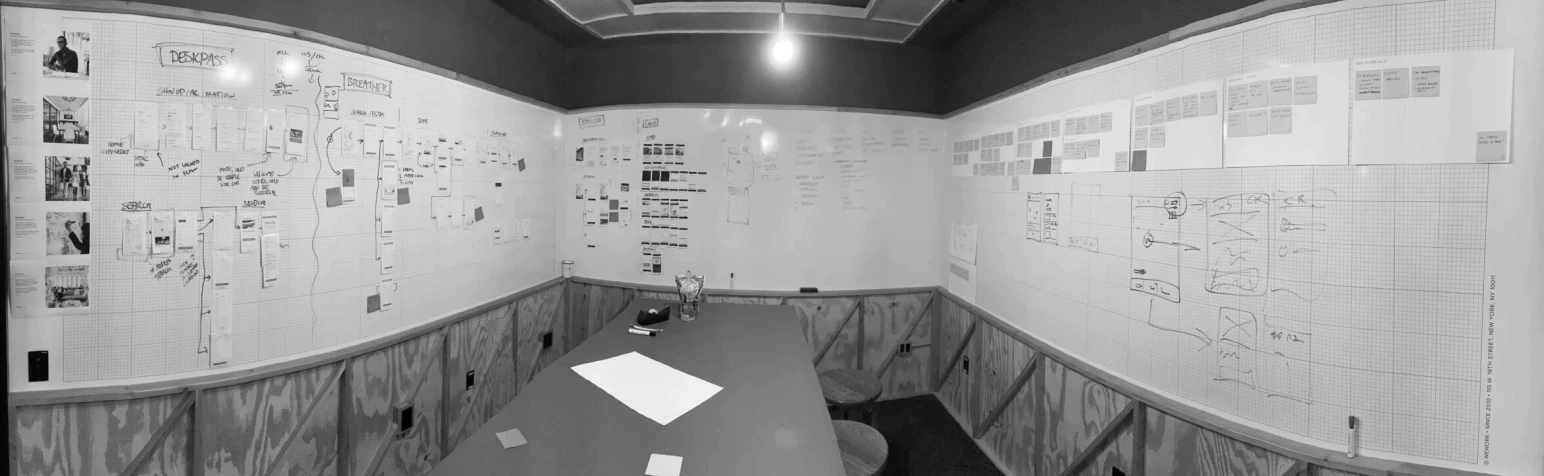
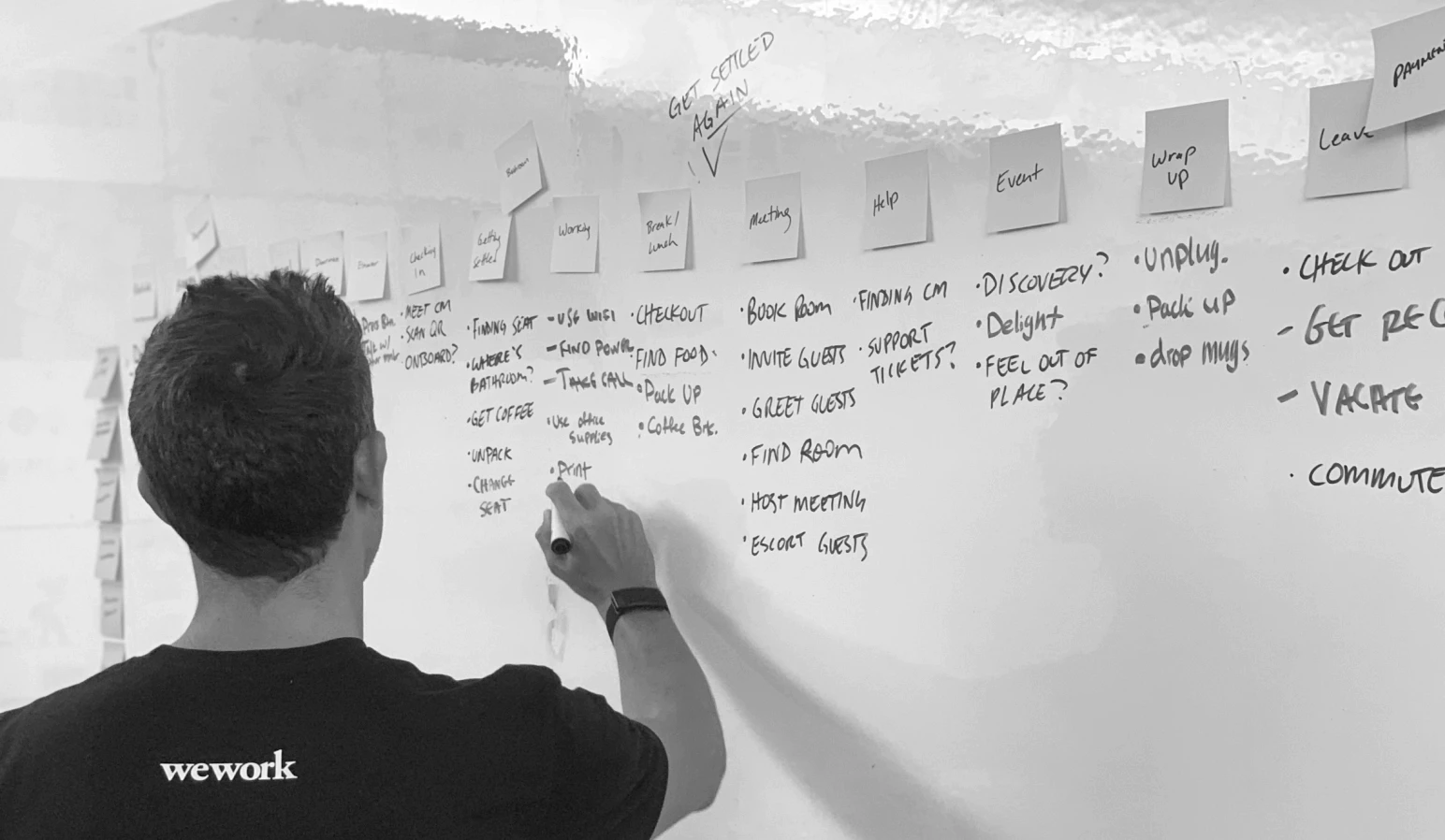
Frustrated with the Member app’s experience and strategy, a product manager and I booked off-site space for a week to ideate a pay-as-you-go product. At the time, WeWork had a sprawling variety of 9+ low-commitment offerings with very high churn rates that were confusing for potential new members to navigate, difficult for sales to sell effectively, and created enormous tech-debt to maintain.
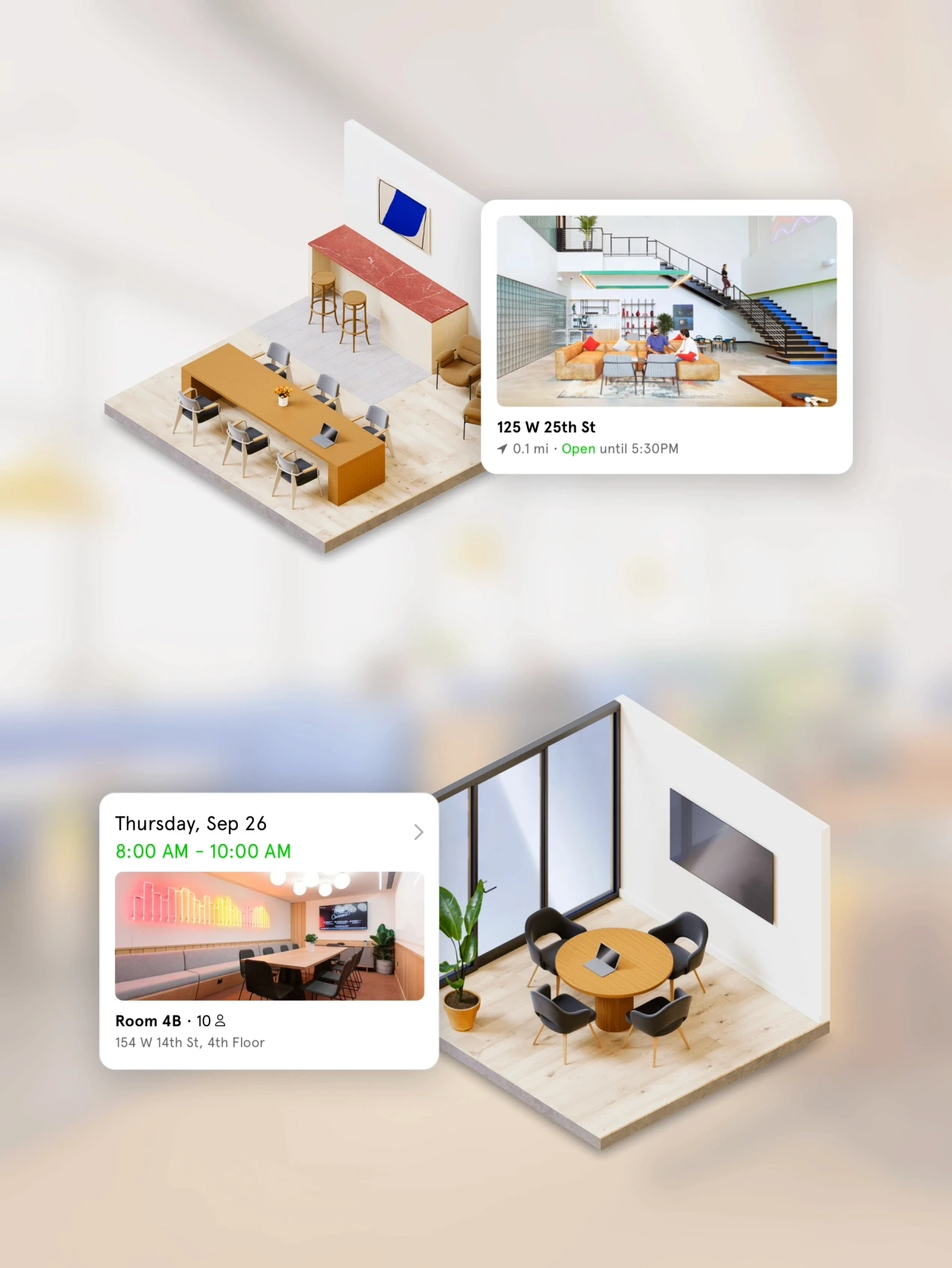
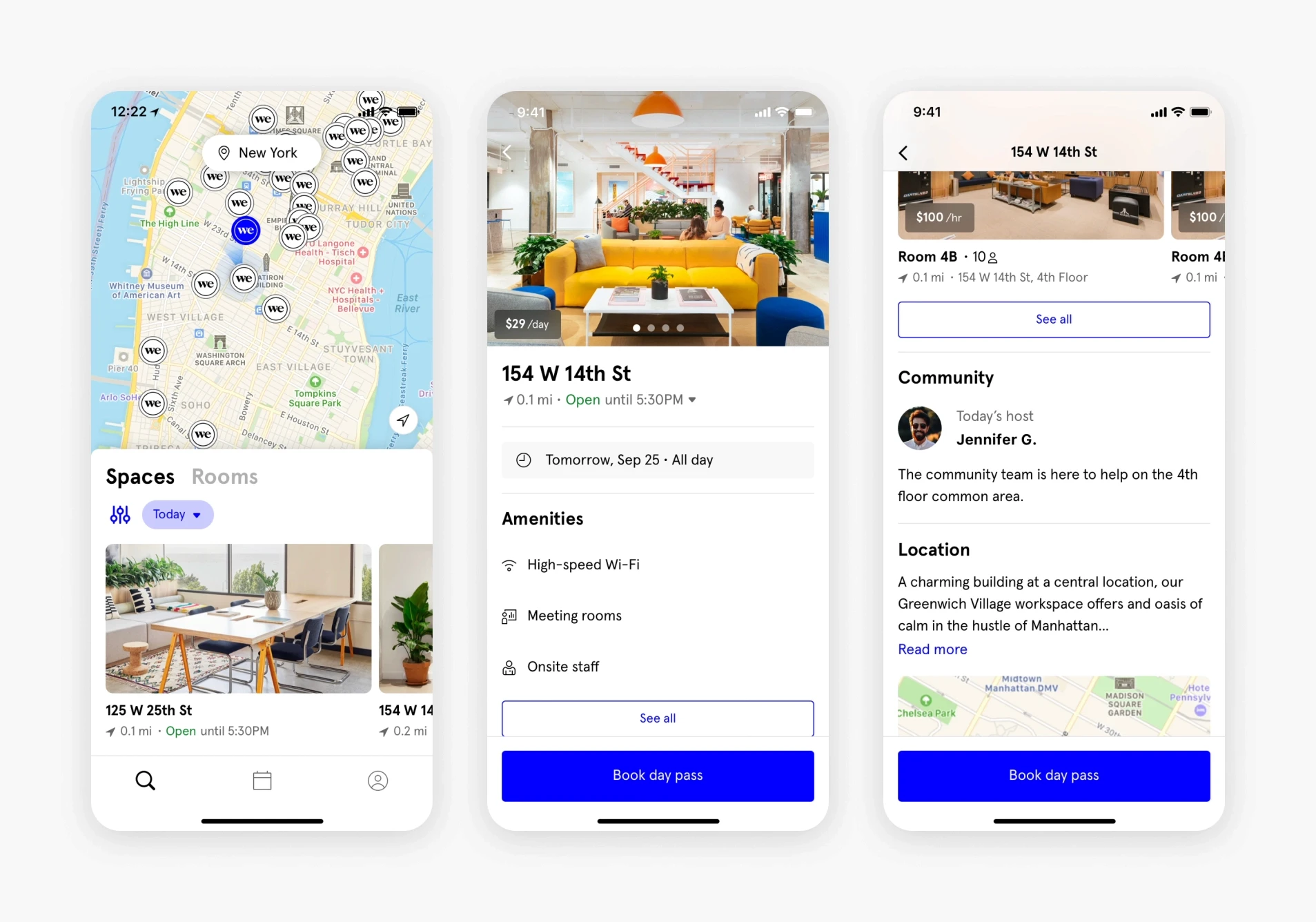
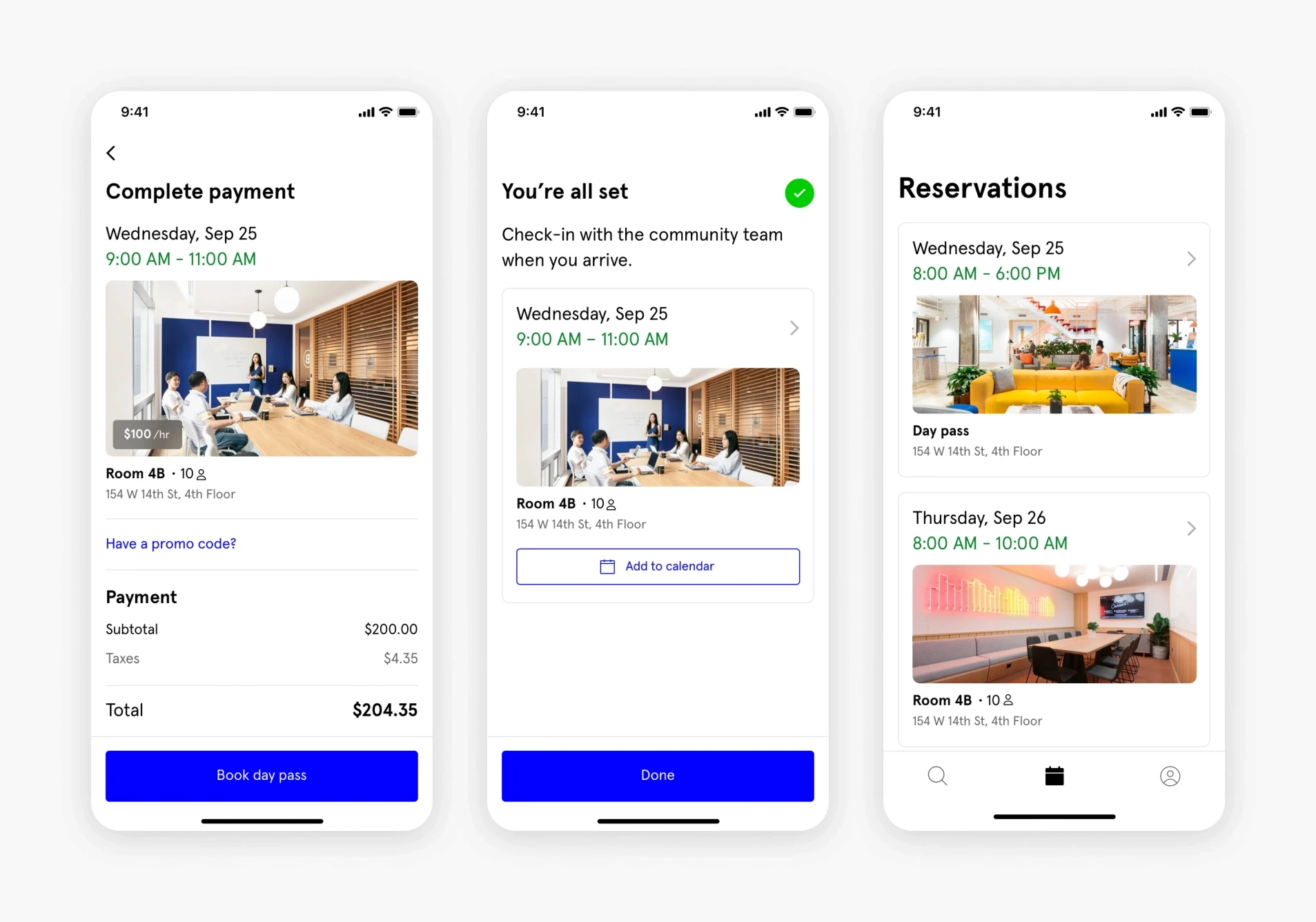
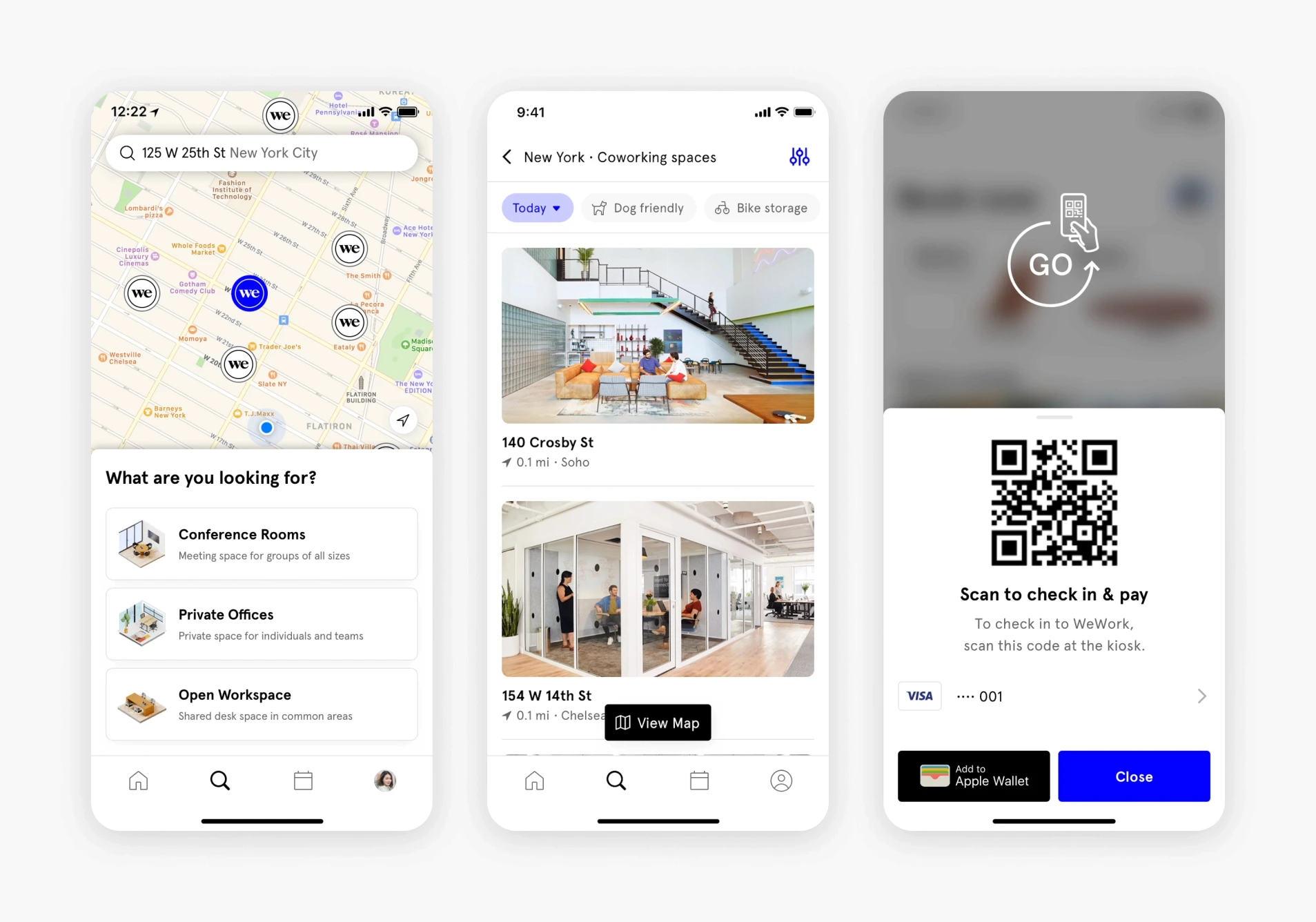
With On Demand we sought to simplify our offerings by designing for by-the-day access to coworking space and by-the-hour access to conference rooms, no membership or monthly-fees required.
On Demand
Drop by, check in, get to work
We knew from interviews that WeWorkers are here to get shit done — whether it’s trying out coworking, visiting while on business travel, getting some heads down time, meeting co-workers, impressing a client, or finding overflow and off-site space.
New users and use-cases
Concentrating is their top priority
People are here to get work done. In fact, their goal is to get to “getting their shit done” as quickly as possible.They want their needs to be met on-demand
Preplanning isn’t their forte or their desire. They are seeking out on-demand workplace services for the flexibility to just show up.They want a seamless onboarding experience
They want to get to concentrating as quickly as possible. Installing an app, carrying a key, inputting payment are all cumbersome barriers to that goal.They want to book space, not desks
Members appreciate the flexibility of moving around the space as needed — from standing to sitting, soft seating to a desk chair.
Designing for the here & now
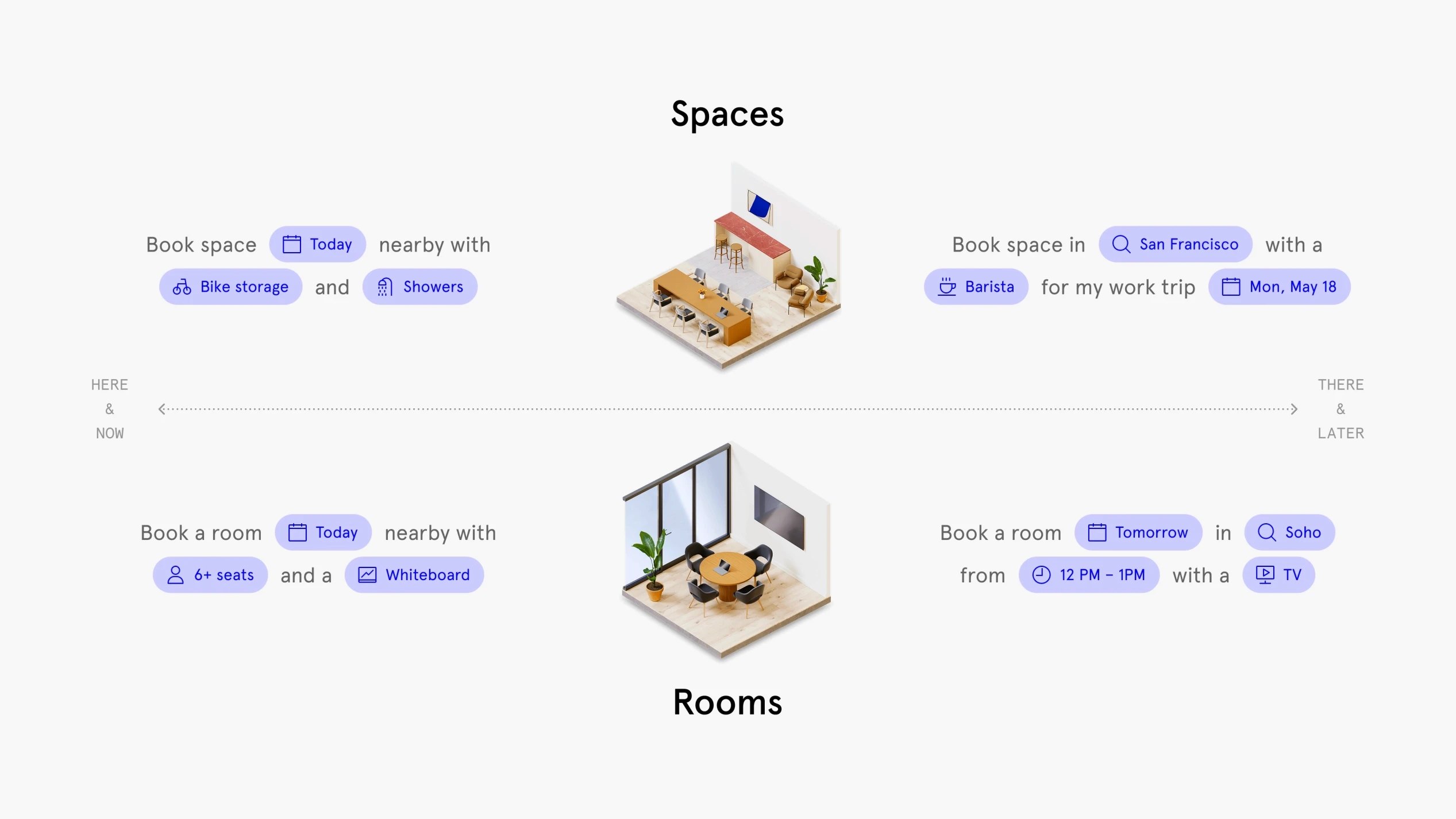
We knew from our data that WeWork members are distributed widely between those that book in the moment (<1hr ahead) and those that plan ahead (>12hrs ahead), so we couldn’t index too heavily for either scenario.
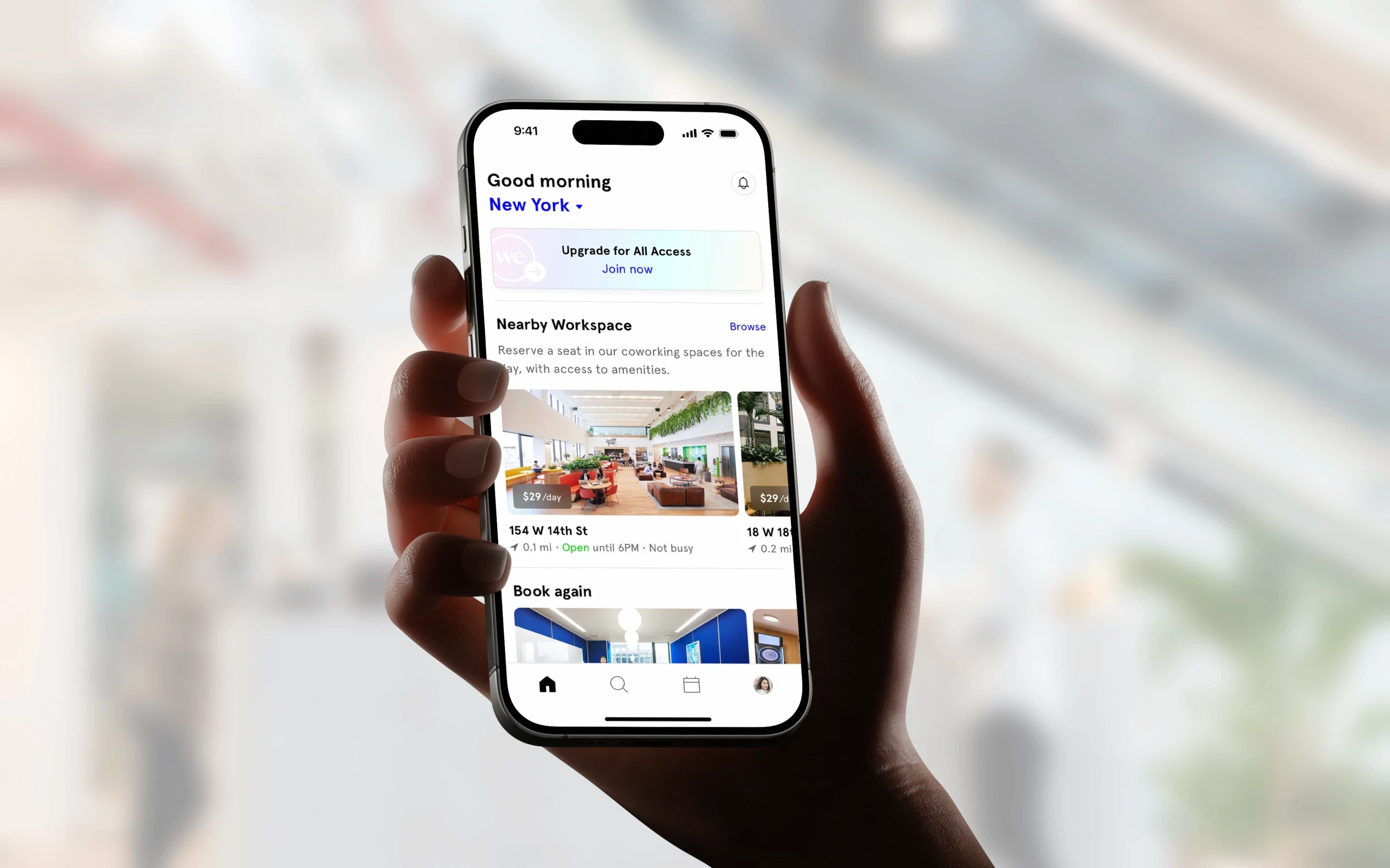
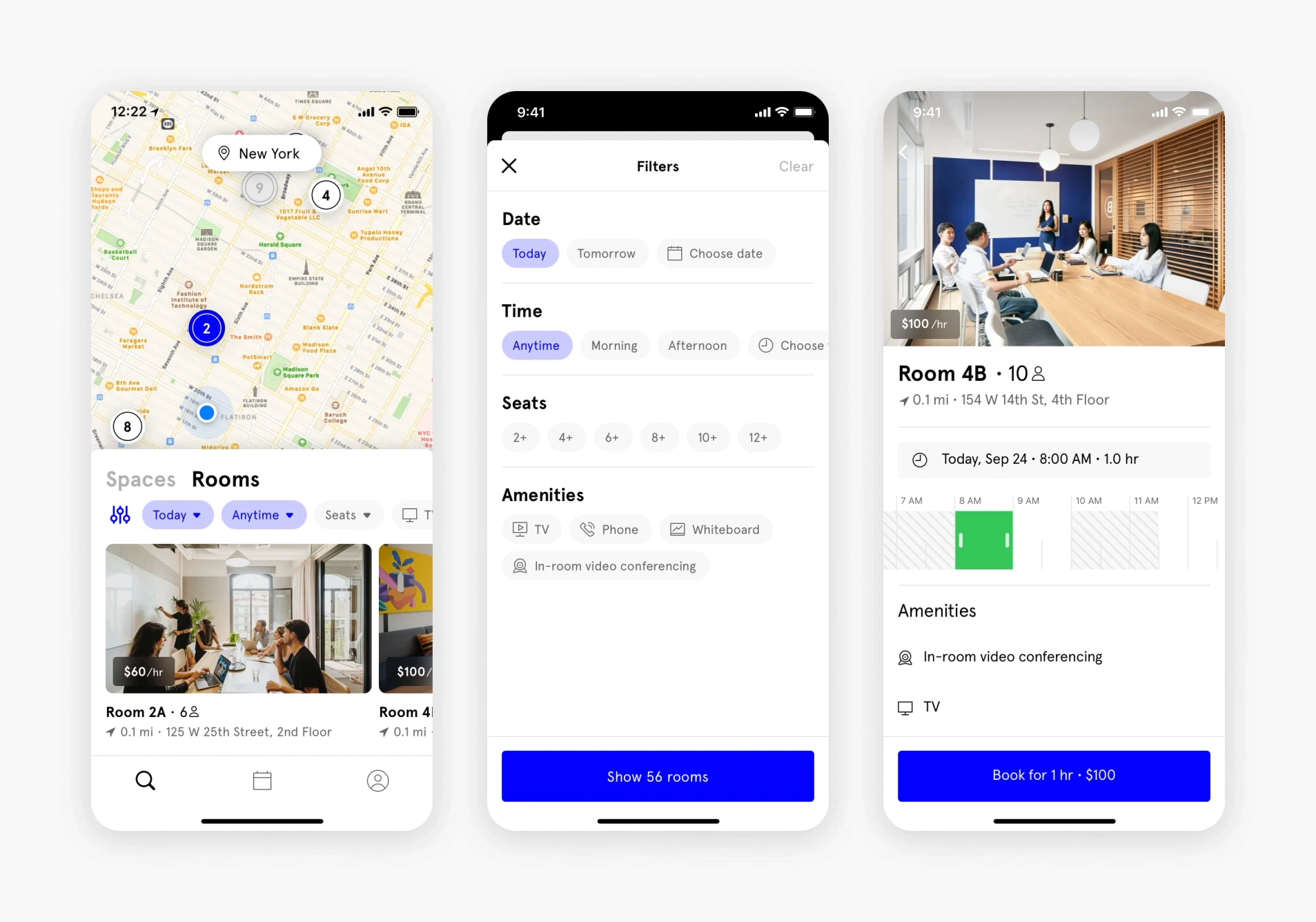
Our solution was to lead with a map view with the nearest location selected to solve for booking in the moment, but give prominent placement to filters with user-friendly options like “Today” and “Tomorrow” for date and “Morning” and “Afternoon” for time.
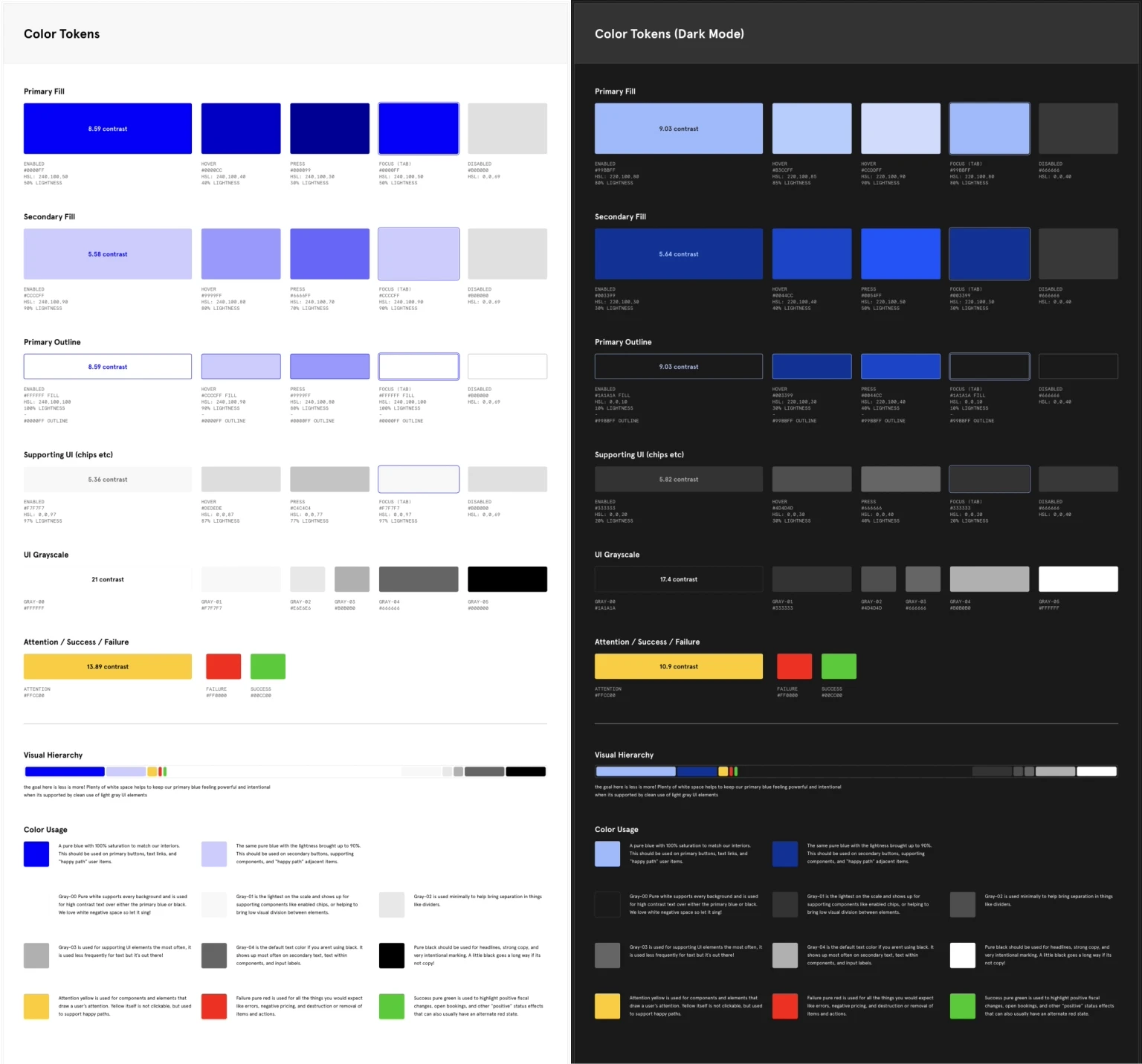
Design system alignment
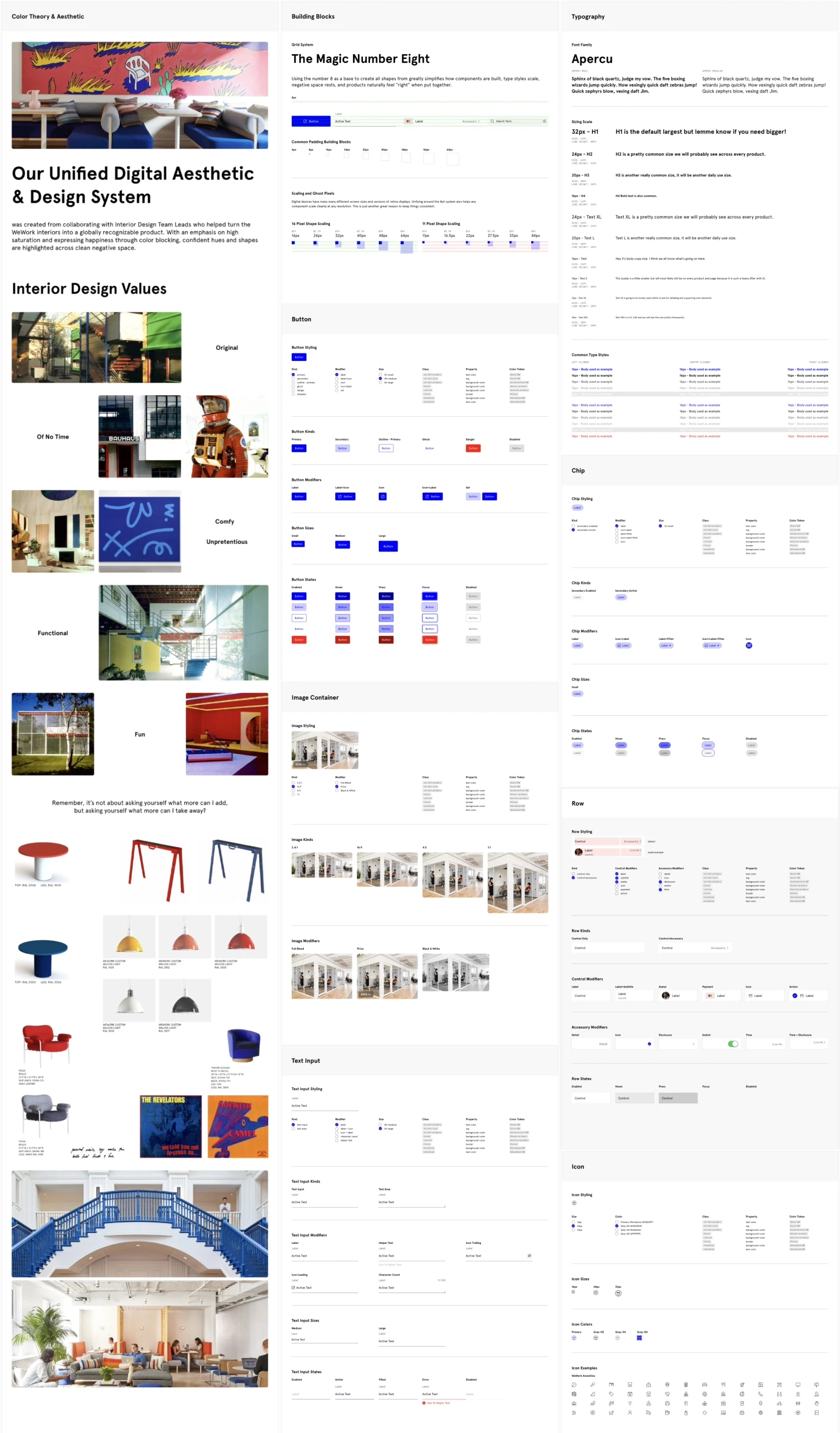
When we began production work for On Demand, we didn’t have a consistent design language system across our web and native products. We saw this new app as an opportunity to have product-led alignment of our visual systems. We collaborated with the web team and interior design teams to define a consistent language across our digital and physical touch-points.
Vision
A vision for the future of work
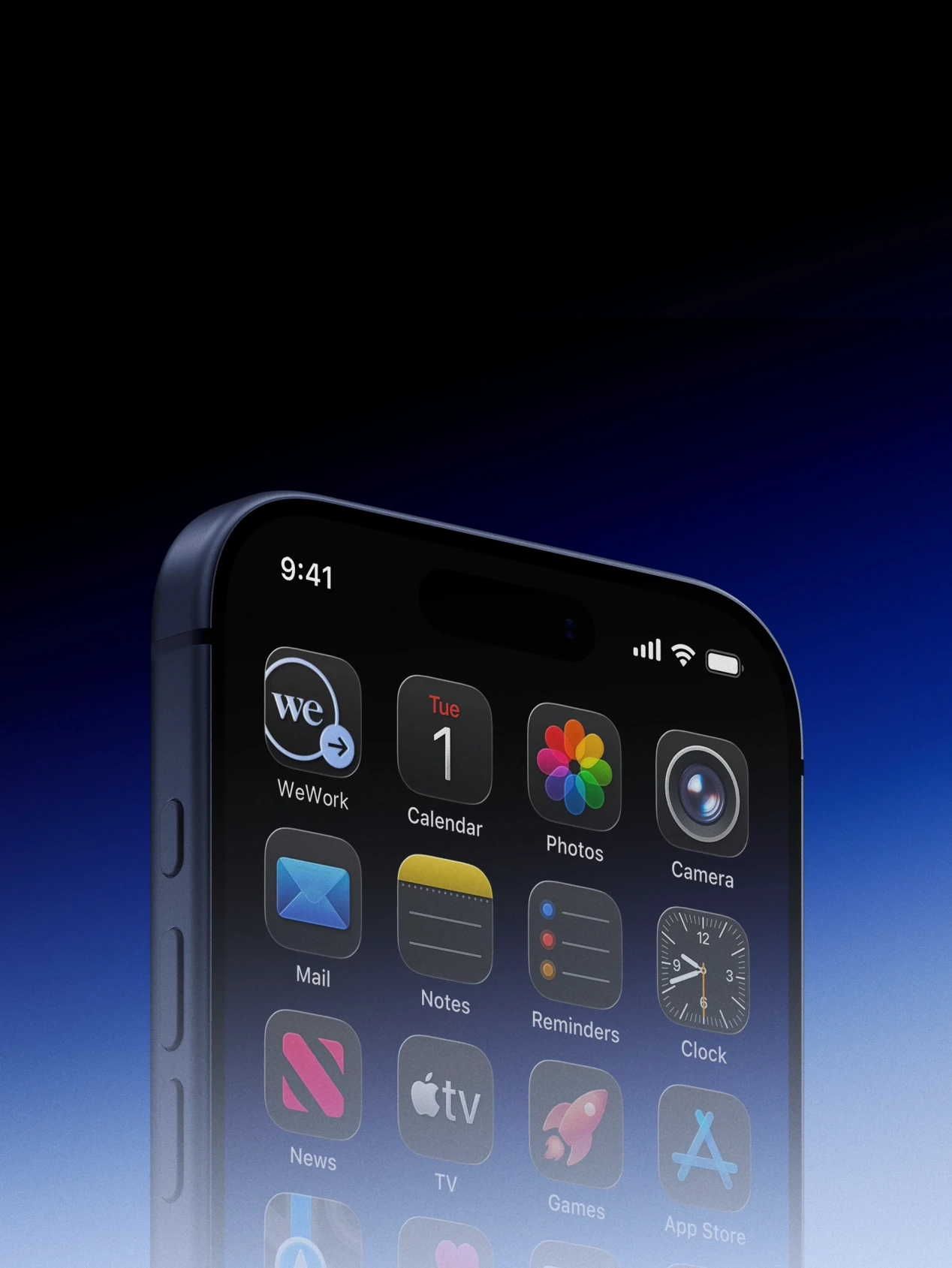
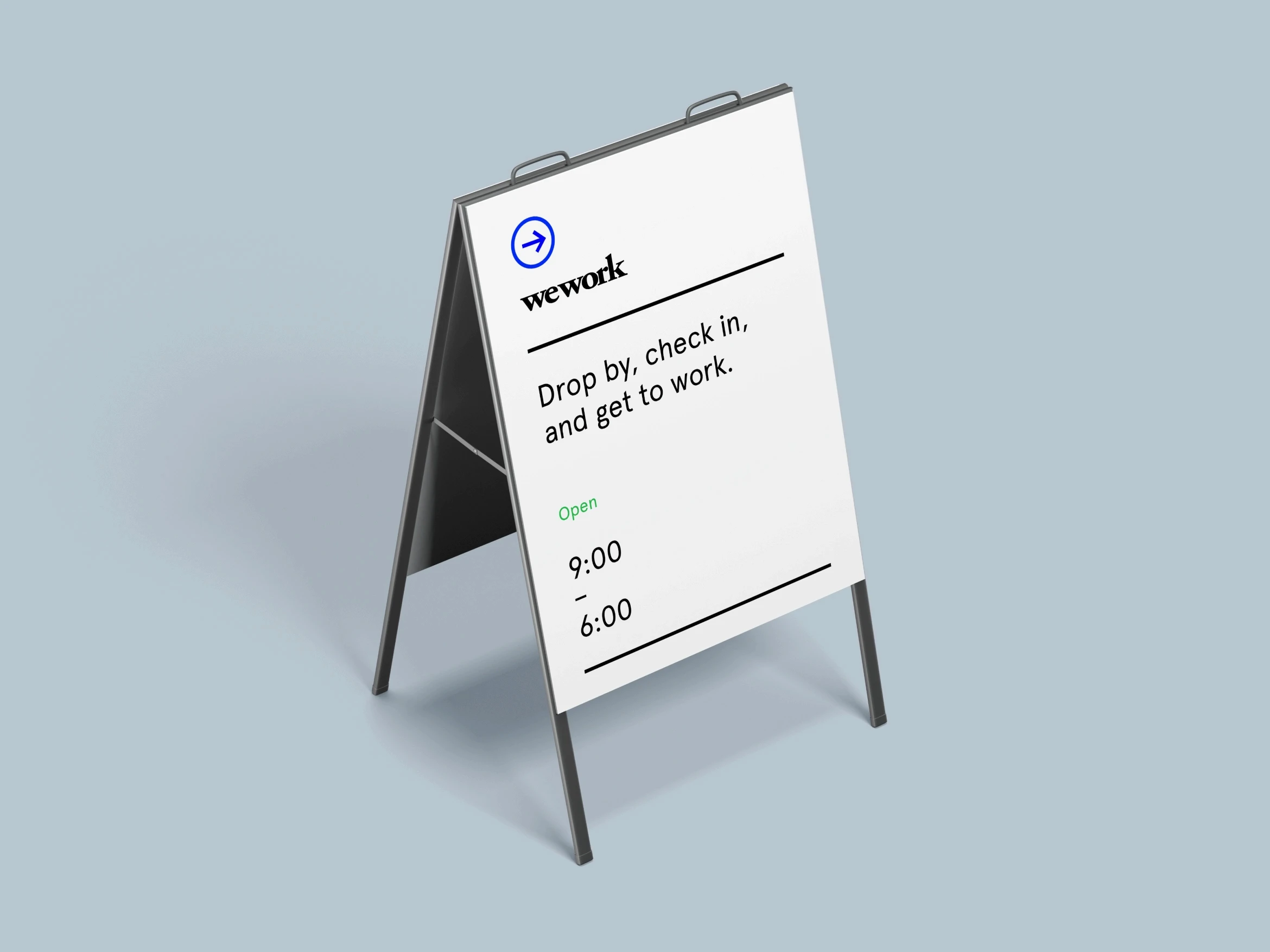
New branding was explored for On Demand to further differentiate it from our member app. Because these users are new to WeWork, and perhaps coworking in general, we wanted to utilize an arrow symbol as a wayfinding mechanism to provide a bread-crumb trail from sidewalk, to community floor, to workspace.
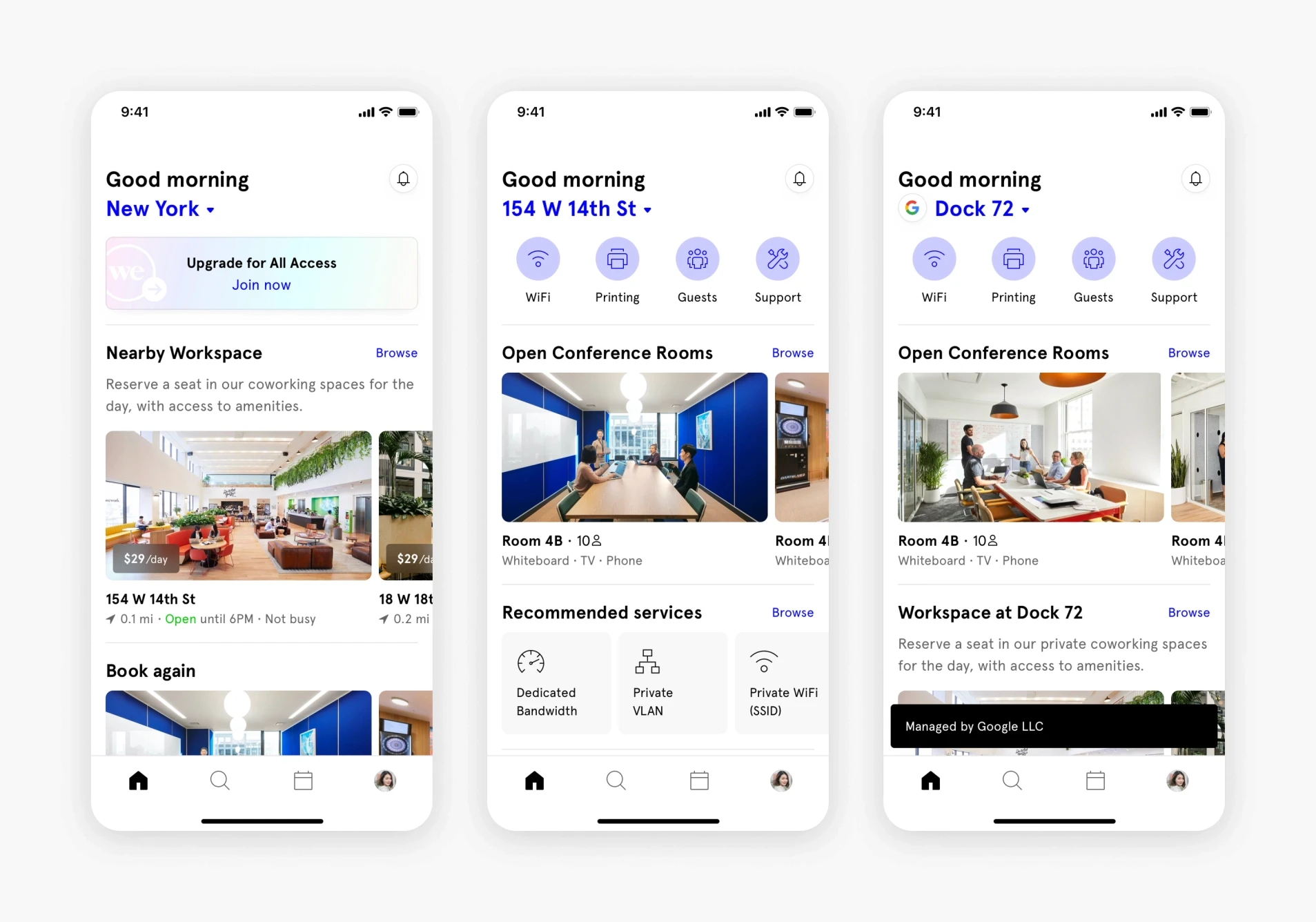
From growth to profit
At the time WeWork was pursuing an IPO in late 2019, the company strategy had pivoted from growth-at-all-costs to optimizing building profitability, and On Demand became a key initiative for providing new members access to underutilized workspace.
I left WeWork after scaling our On Demand MVP from local pilot to global launch. The original WeWork Member app has been sunset and all users were migrated to the new app and product.
Flexibility is the future of work.
Featured work